Profile

Bipolar tracker for mood, energy, sleep, and rhythm

This profile supports mood, energy, sleep, and surrounding context when those fields are useful. It changes the wording used in your record so it is easier to review over time; it does not diagnose or forecast anything about you.

Common scenario “The day did not feel obviously wrong in the moment, but sleep and energy had started changing together. Logging it kept that link visible much sooner.”
Sleep and energy review Sleep and energy context Higher and lower mood context
See the review ↓

What DaySense helps you do

DaySense keeps your daily record in one place.

  • LogMood, energy, sleep, notes, and bipolar-aware context.
  • ReviewBrowse your record across recent days.
  • ReflectSave short weekly reflections.
  • Keep privateKeep the record private and local.
Best fit Choose this profile when you want mood, energy, sleep, and surrounding context available in the record while still controlling what appears in each check-in.

App screenshots

Optional labels for sleep, energy, and mood context

The Bipolar profile lets you add optional context around sleep, energy, mood direction, and related factors when you choose. These labels simply keep the record focused on the details you chose to log.

  • You choose what context to log and when to skip it.
  • DaySense does not diagnose, forecast, or clinically label you.
  • The labels help later review stay tied to what you actually entered.
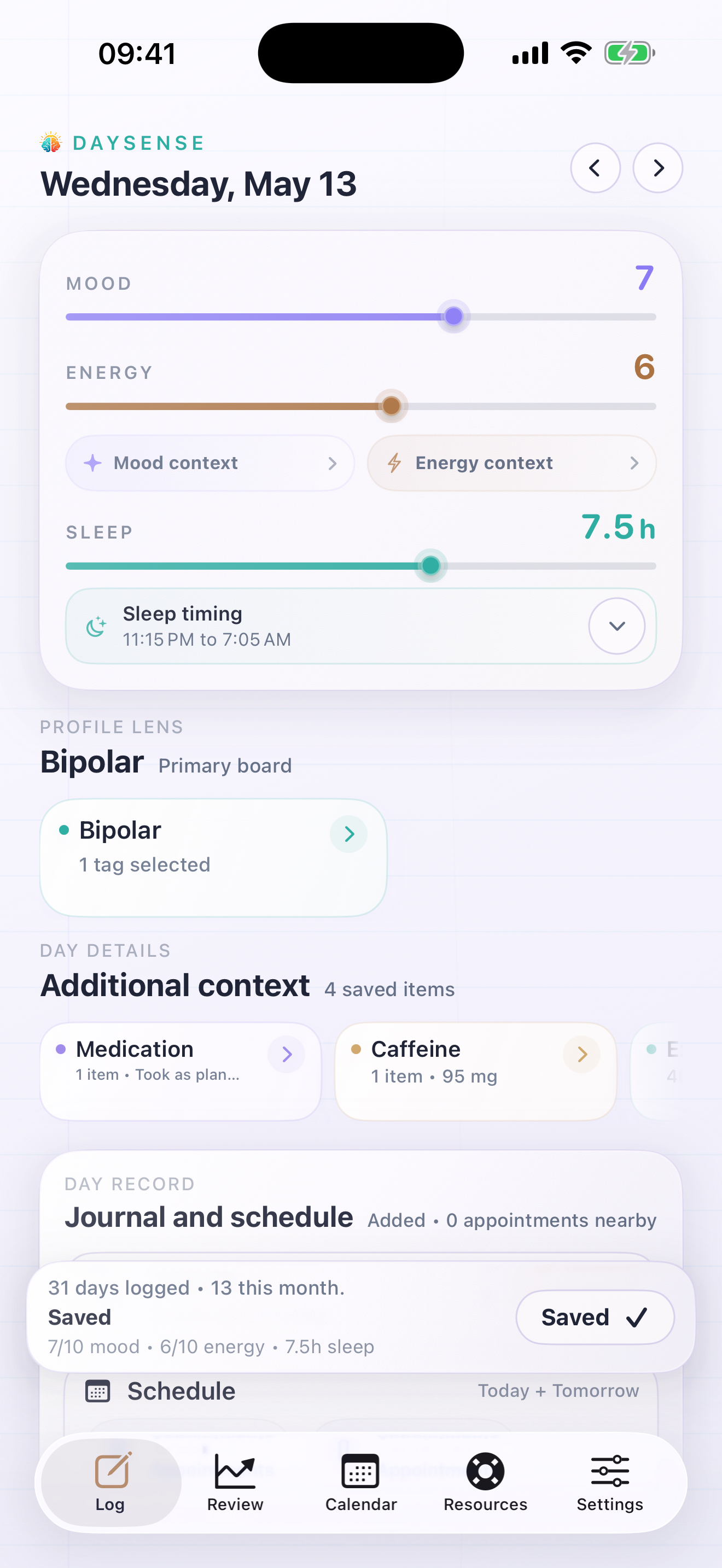
DaySense Bipolar tracker – daily log screen with rhythm context
LogRhythm context
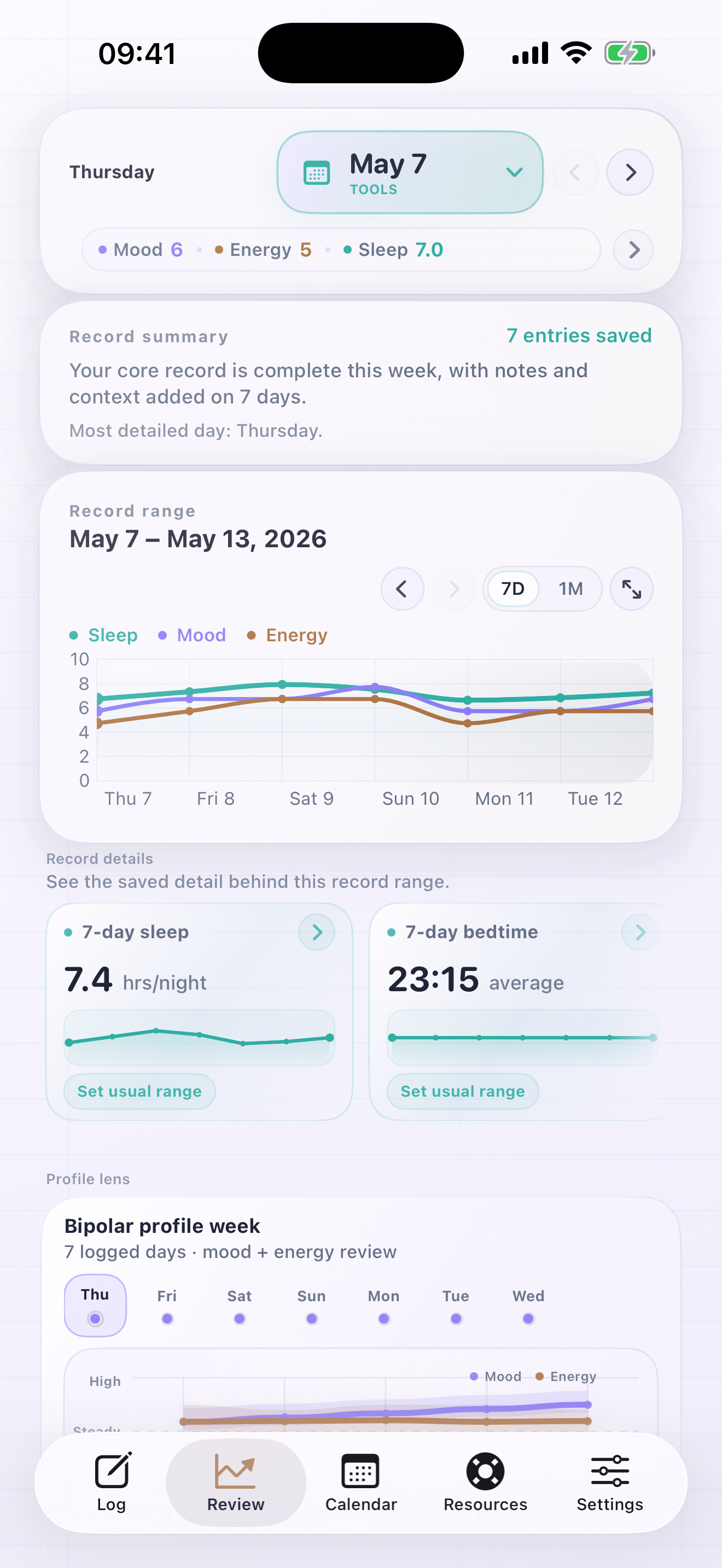
DaySense Bipolar tracker – review screen browsing recent days
ReviewBrowse your record
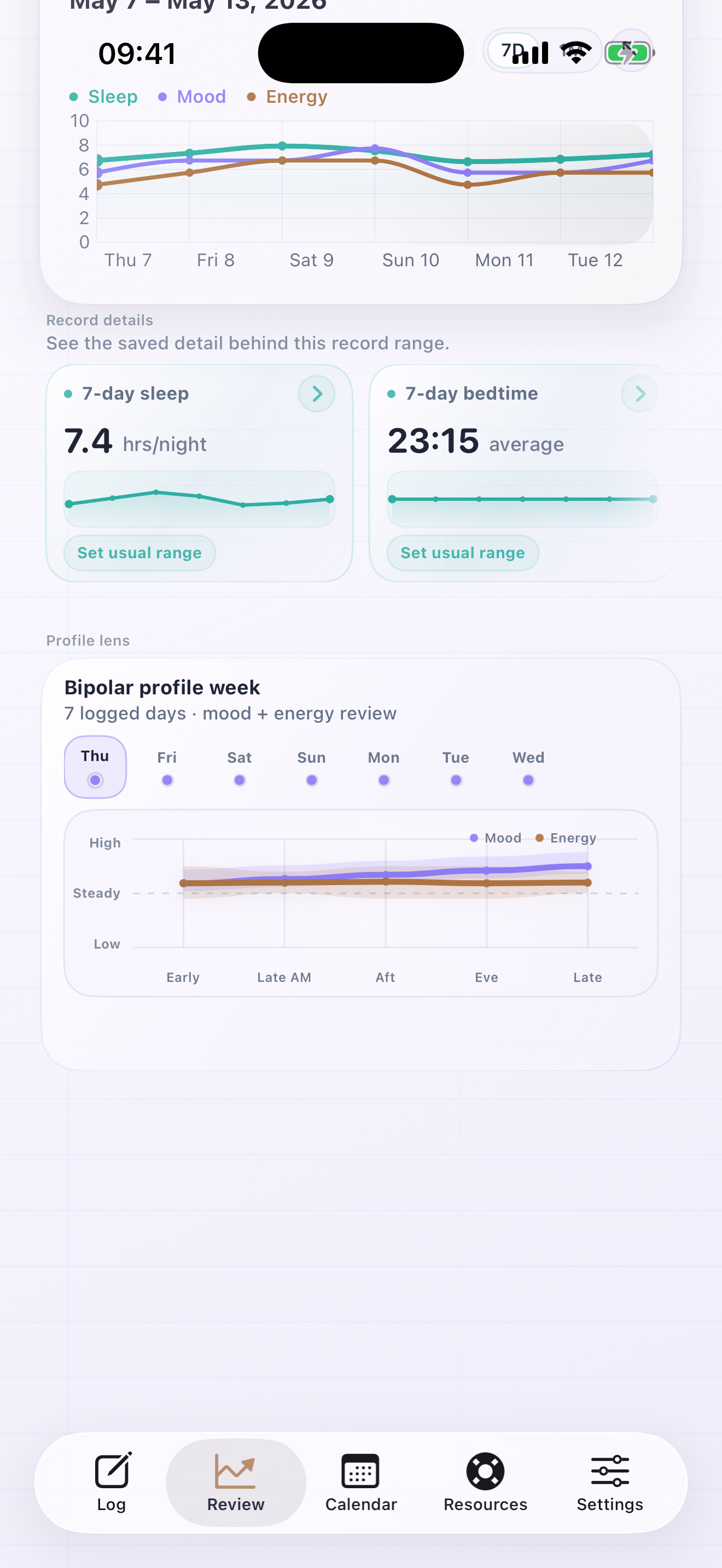
DaySense Bipolar tracker – rhythm board showing weekly mood and energy rhythm
Rhythm boardWeekly mood rhythm

Privacy and local-first

Private by default, with proof.

DaySense helps you see the days behind what repeated — without diagnosis, advice, or prediction. The privacy policy says entries are stored locally, no account is needed for core tracking, and entries are not uploaded to a DaySense cloud service in current builds.

Read the DaySense privacy policy

Get DaySense

Log your day, then review your record.

The app loop is simple: log the day, review your record, and save a short weekly reflection when something is worth keeping.

How the review works

How this profile works

This profile can keep mood, energy, sleep, and related context visible together when those fields are included, so the record is easier to review later.

Core metrics

Core daily metrics

The daily log keeps mood, energy, and sleep in one place. Stress can be added as a Premium tracker, or the check-in can stay focused on a smaller field set. Related context can add shape where those inputs are available.

Energy context

Activation / rhythm context

The profile keeps sleep and energy changes visible together, especially when the day felt more activated than usual.

Mood context

Lower mood / pullback context

It also keeps lower-mood context visible so that changes in mood, energy, and sleep can be reviewed together later.

When sleep, energy, and mood move together, the day remains easier to review later.

What this profile adds

Linked changes stay visible in later review.

The value of this profile is that it keeps linked changes together in the record so later review is clearer. It does not diagnose or evaluate; it keeps higher-energy and lower-mood context in the same daily record.

Record review in practice

Review keeps linked mood, sleep, energy, and context entries together.

This matters most when you want to look back on how a run of days developed. The goal is to support a clearer record over time that you can review yourself or share if you choose.

Review language

How the review stays calm

Broad review ranges help keep the public-facing language observational, while sleep visibility keeps meaningful sleep changes visible alongside mood and energy.

Settled days
Settled read
Lower-change days
Settled read
Directional changes
Change-led review
Notable changes
Clear deviation
Sleep visibility: Lower logged sleep can make a day read less settled, which helps keep sleep changes visible alongside mood and energy.

Context modifiers

What this profile keeps visible

These are the broad context areas this profile is designed to keep visible.

ModifierNotes
Activation / rhythm contextHigher-activation days can stay visible without turning the review into diagnostic language.
Lower mood / pullback contextLower mood days can remain visible as part of the same daily record.
Core baselineThe core daily log carries the experience. Extra context adds shape where it is available.

Design rationale

Why the wording stays restrained

"The bipolar-focused profile is about making the shape of a run of days easier to see, especially when sleep, energy, mood, and context are drifting together."

This profile combines higher-energy and lower-mood context in one place so the daily record can support later review rather than only immediate reaction.

That makes it especially useful when you want to keep a non-diagnostic but structured record of changes that are easy to rationalise in the moment.

The emphasis stays on self-tracking clarity, sleep-related review, and calmer later record-keeping.

Review focus

What stays visible over time

In practice, this profile is best at preserving linked mood, sleep, and energy changes rather than flattening them into one generic headline.

Sleep and energy changes Lower mood / pullback Linked context

Background reading

Background sources

These sources informed the labels and context included in this profile. They are product-design inputs, not medical guidance, and DaySense does not use them to diagnose, treat, or recommend care.

Harvey, A.G. (2008), sleep and circadian rhythm background, American Journal of Psychiatry, 165(7), pp. 820-829.
Alloy, L.B. et al. (2017), mood-spectrum background, Bipolar Disorders, 19(6).
Frank, E. et al. (2005), social rhythm background, Archives of General Psychiatry, 62(9), pp. 996-1004.
Levin, F.R. et al. (2015), alcohol-use context background, Psychiatric Clinics of North America.
Lingam, R. and Scott, J. (2002), adherence-context background, Acta Psychiatrica Scandinavica, 105(3), pp. 164-172.

All profiles

Explore other tracking modes